Health and safety is a core issue in every E tū workplace, from the airport to the factory floor to the rest home. Right now, workers are leading on safety, while the Government tries to take the law backwards.
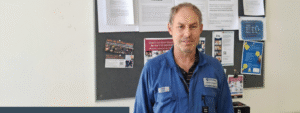
In aviation, E tū delegate and trained health and safety rep Craig Best used a tool called a Provisional Improvement Notice, or PIN, to get his employer to act on an exposure event affecting members. A PIN lets a trained health and safety rep formally require a workplace problem to be fixed. It is one of the strongest tools workers have, and it is not used lightly.
“It was a difficult and unpleasant situation to be in. It was like biting the hand that feeds you. But with the support of my fellow health and safety reps, delegates, my union organiser, and the union’s expertise in helping me draft the PINs, I knew it was the right course of action. The process was thorough. It wasn’t taken lightly. A lot of due diligence was done before a PIN was ever issued.”
“It was met with denial and resistance at first. Some members felt like we were going into a fist fight with the employer. But out of adversity, good things happen. Our employer started to re-engage with the union, the health and safety reps, health professionals, and members. People realised that their health and safety reps are real, and that we play a real part. Change is on the way.” — Craig Best, E tū delegate and health and safety rep
E tū members have stood alongside Anna Osborne and Sonya Rockhouse of Stand With Pike, who lost loved ones at Pike River and have fought ever since to make sure no other family goes through the same thing.
The changes the Government is pushing through would destroy the very protections that came as a result of the lessons of that disaster. Its Health and Safety at Work Amendment Bill carves out every business with fewer than 20 workers, around 97% of all businesses in the country. Those workplaces would only have to manage “critical risks,” the ones likely to kill or seriously injure, while they stop actively managing everything else. The Bill also pushes WorkSafe away from being an enforcer and towards being an adviser.
Most health and safety issues, strains, sprains, fatigue, stress and other psychosocial hazards, don’t count as “critical”. And if this Bill goes through, most employers can ignore them.
In plain terms, most workplaces in Aotearoa would be held to a lower standard, and the workers are carrying the risk whether they are in heavy industries, such as mining and steel, or small, insecure jobs where there is the least power to speak up. That is the opposite of what Pike River taught us. The Bill has already been to a Parliamentary select committee hearing and it is now being pushed through Parliament, with the Government wanting it passed before the election.
This is exactly why the election matters. In November, workers can vote for parties that will keep our health and safety law strong, and that treat the right to come home safe for what it is, a right, not red tape to be cut. Make sure you are enrolled, and let this be one of the reasons you vote.