
Resene workers fight for the Living Wage
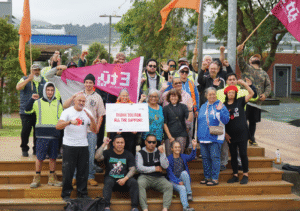
Workers at the Resene Paints factory in Naenae have been organising and striking for their first collective agreement, in a classic Living Wage community campaign. When members picketed outside the company’s headquarters, Resene cancelled a planned event with Hurricanes rugby players at the last minute.
“Nick Nightingale and his team would bend over backwards to put more effort and profits into sponsorships like the Hurricanes, than give back to us workers,” delegate Mags Jackson told the crowd. — Mags Jackson, Resene delegate
Sanford workers on strike in Havelock

Shellfish processing workers at Sanford’s Havelock site went on strike after the company pushed for clawbacks, including cuts to long service leave and removing some workers from the collective agreement, while offering a pay rise below inflation.
Te Papa workers rally to save jobs

E tū members at Te Papa Tongarewa rallied at the museum’s forecourt against a restructure that cut jobs and stripped out expertise, while the highest-paid managers received significant pay increases. Members know they are kaitiaki of the nation’s taonga, and they were not willing to see the museum hollowed out without a fight.
“We make the museum run. We care for the collections, carry out the research, put together the exhibits, and host guests,” says E tū delegate and Curator of Fishes Andrew Stewart. — Andrew Stewart, E tū delegate, Curator of Fishes, Te Papa
NZ Steel workers face a restructure

At NZ Steel’s Glenbrook site, members are working through a major restructure that comes alongside the installation of a new electric arc furnace, known internally as Project Electron. The changes reach across teams from the kilns and melters to steelmaking, utilities, and the mine site, and in many areas they mean fewer workers and lower weekly pay. E tū is standing with members through every step of the process to protect jobs and conditions.
Tiwai workers take a stand

E tū members at Rio Tinto’s aluminium smelter at Tiwai Point took industrial action after more than two and a half years of bargaining without a collective agreement. The smelter is a cornerstone of the Southland economy, directly employing around 1,000 people and supporting thousands more jobs. Rio Tinto has secured the smelter’s future through electricity arrangements running to at least 2044, and it is a hugely profitable global company. The workers who keep Tiwai running deserve a fair share of that success.
“We’re not being unreasonable. What we want is decent work,” says Tiwai production worker and E tū delegate Dee. “This is about standing together and saying our work has value.” — Dee, Tiwai production worker and E tū delegate